How to make a website for free: what you really get in 2026
G. CHRIST
Published on October 12, 2026
Yes, you can make a website for free. It's not a scam or a myth: four major platforms let you publish a site without paying a franc or entering a card number. The real question lies elsewhere. What exactly do you get, and what do you pay in ways other than money?
Search for that question on Google and the first page is filled by the platforms themselves. Fair enough, they sell their free plan to move you to the paid one later. So we reread their official pages on 12 October 2026, wrote down in black and white what each free plan gives and holds back, and we'll tell you when we would recommend it ourselves to an SME, association or NGO in Benin.
Logos: Wix, WordPress and Google Sites (Wikimedia Commons), Canva (canva.com).
The four free options and what they really give you
Wix free: complete, but with Wix branding everywhere
According to Wix's help centre, a free site gets 500 MB of storage and 1 GB of bandwidth, with an address like "prefix.wixsite.com/sitename". Connecting your own domain or removing Wix ads requires a Premium plan. The editor, though, is the same as in the paid version, and that's its big strength: you can build something good-looking without installing anything.
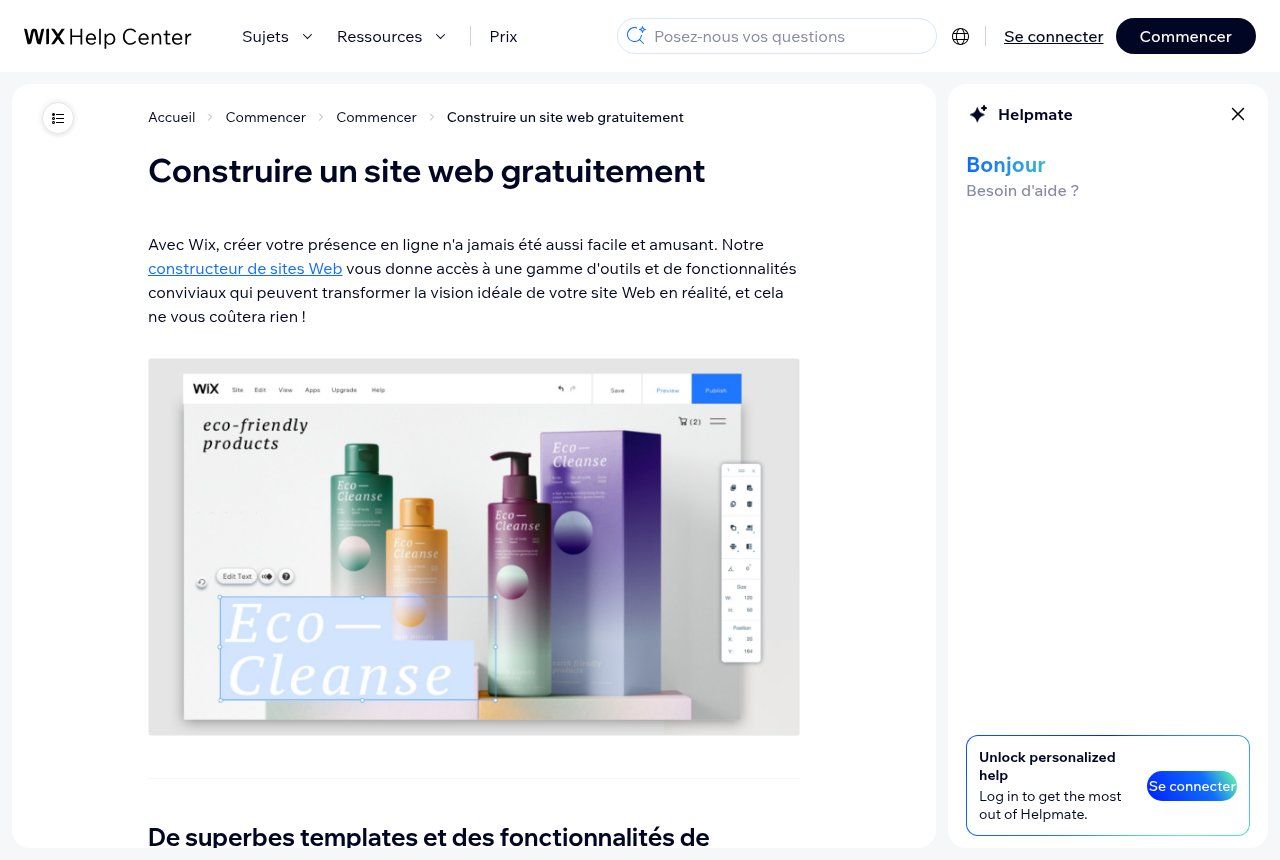
Source: screenshot of the "Build a website for free" page in the Wix help centre (support.wix.com, French version), viewed on 12 October 2026.
WordPress.com free: no time limit, but with ads
On its pricing page, WordPress.com is clear: the free plan never expires, it includes 1 GB of storage and a "sitename.wordpress.com" address. In return, "free sites display WordPress.com ads to visitors". For a personal blog, that's acceptable. For a business, seeing someone else's ad in the middle of your services page, much less so.
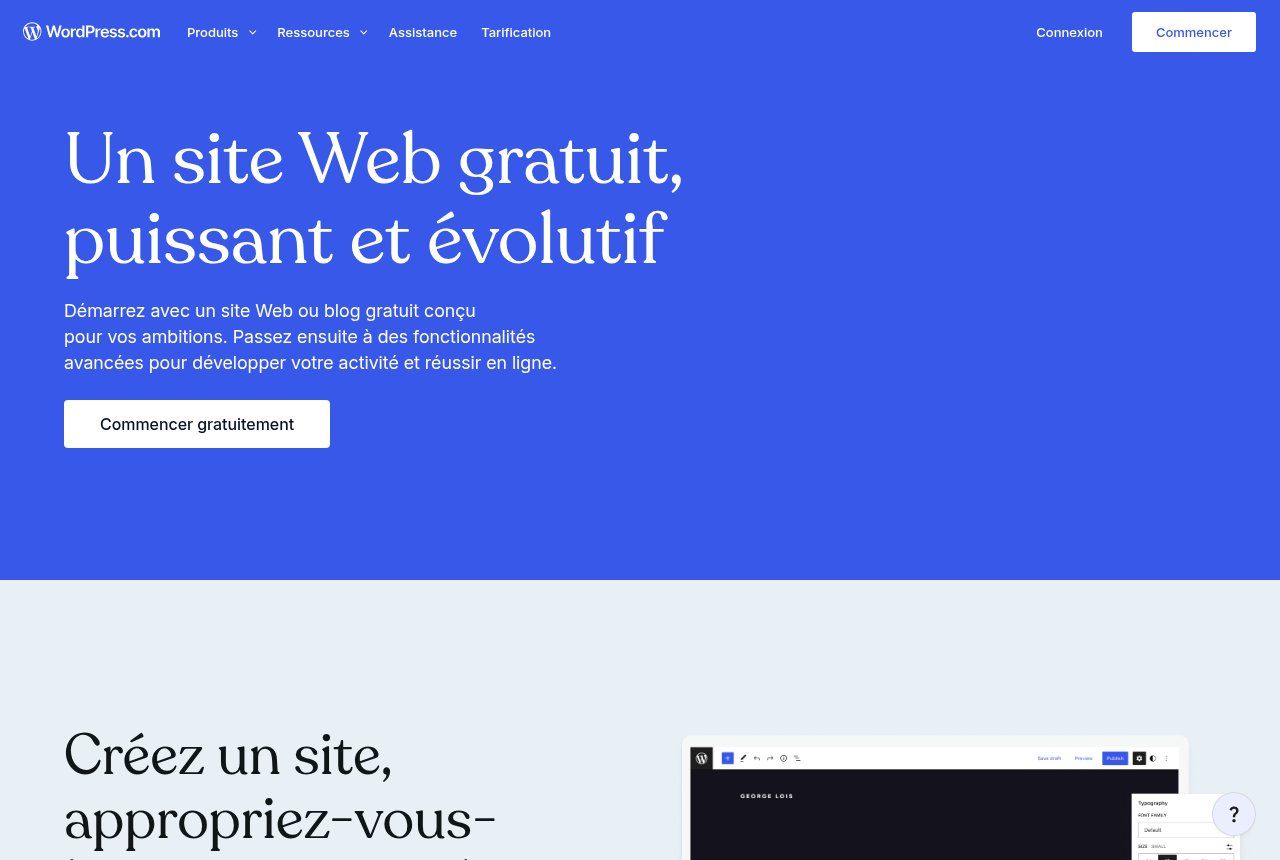
Source: screenshot of the official WordPress.com Free page (wordpress.com, French version), viewed on 12 October 2026.
Watch out for a common mix-up: WordPress.com is a hosted service. WordPress.org is the free software you install on your own hosting. The software is free, but you pay for hosting and need to know how to maintain it.
Google Sites: plain, free, and the only one that takes your domain without a subscription
Google Sites is the least-known option and, in our view, the most interesting for a small organisation. With a Google account, you publish a site at a "sites.google.com/…" address. Above all, Google Sites' official help explains how to connect a custom domain you already own, up to five per site, after verifying it in Google Search Console. The address must include a subdomain, such as "www".
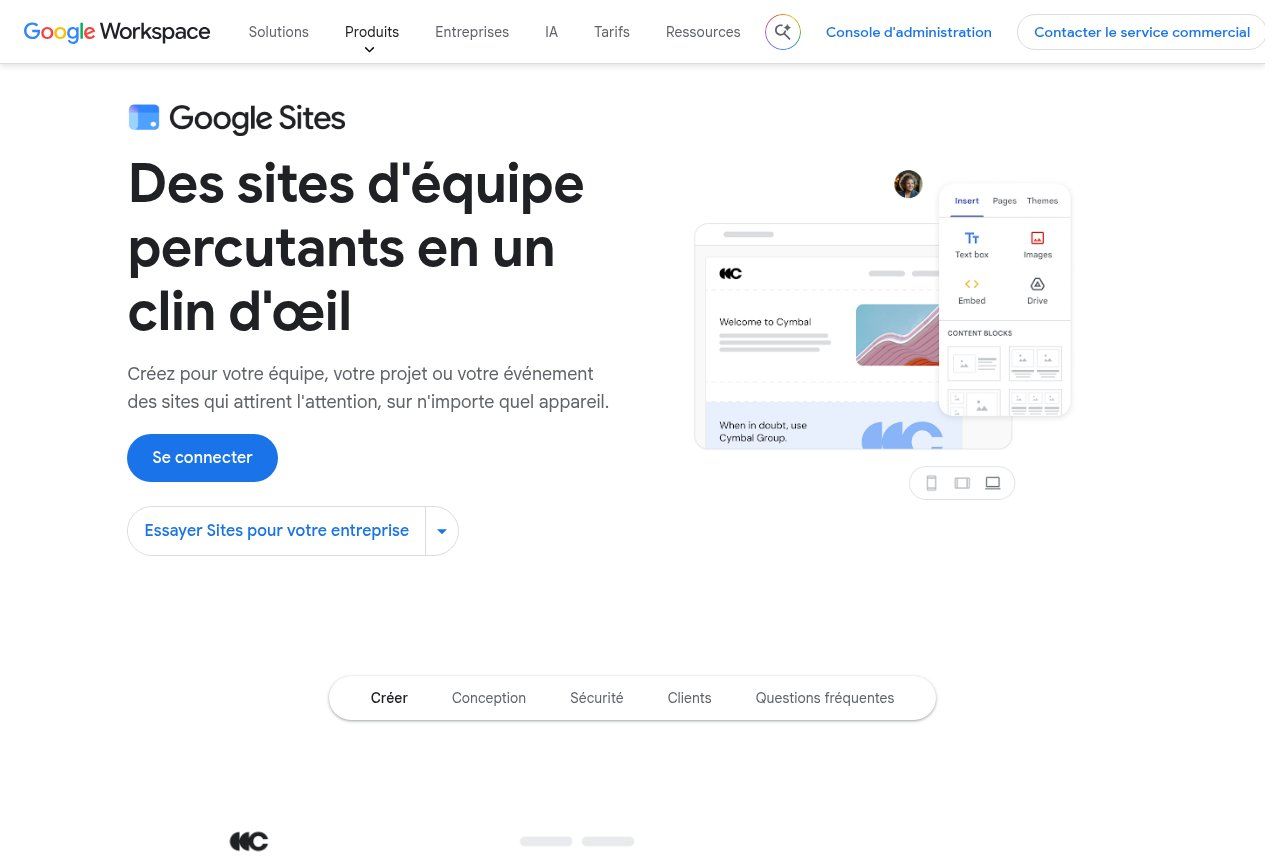
Source: screenshot of the Google Sites page on workspace.google.com (French version), viewed on 12 October 2026.
The downside: templates are basic, there's no built-in store, and you can't touch the code. For a clean presentation page, it's enough. For selling online or capturing detailed quote requests, it isn't.
Canva: quick for a one-page site
Canva also offers a website builder. Its FAQ states that sites are free under the "xyz.my.canva.site" address, with up to five live sites. Buying a domain or using your own requires Canva Pro. It's handy for an event page, a portfolio or a short campaign, especially if you already design your visuals in Canva.
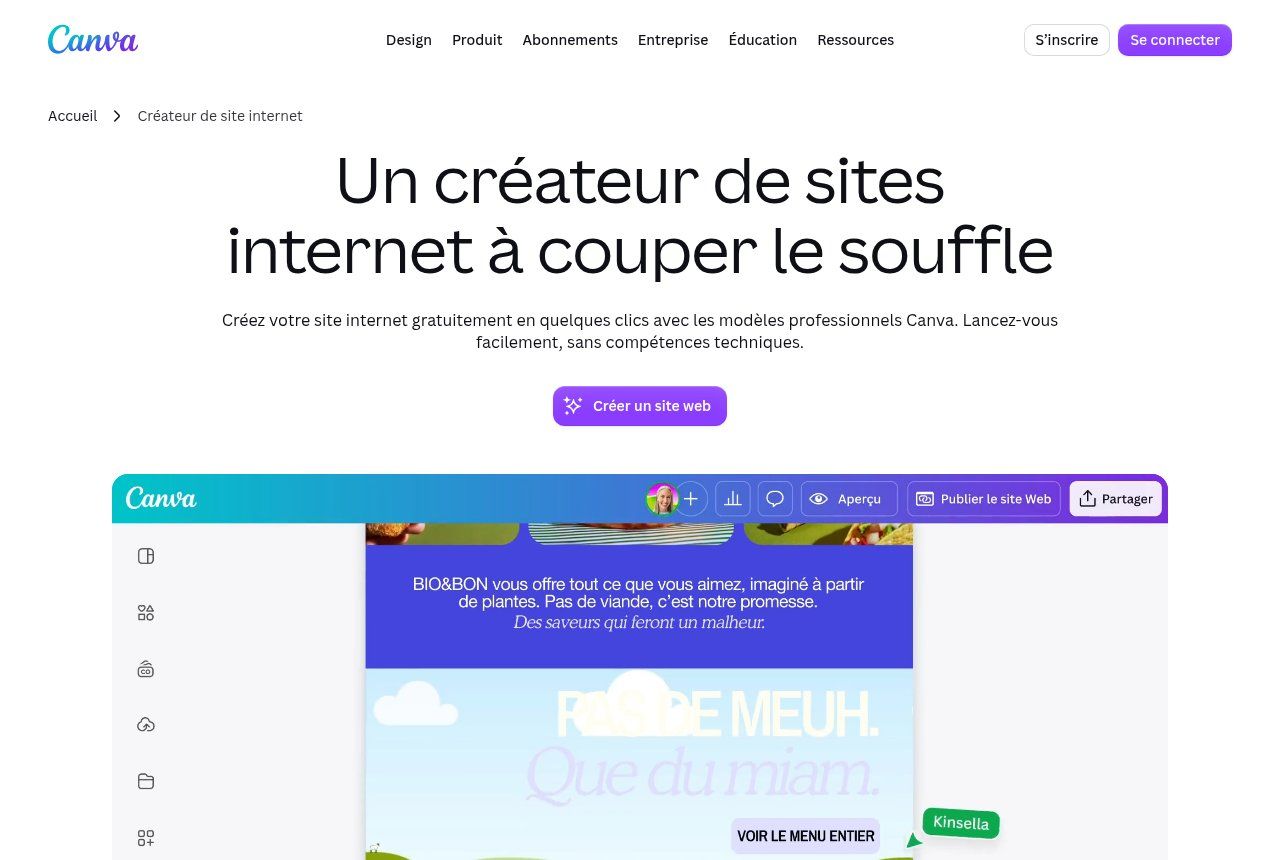
Source: screenshot of the official Canva website builder page (canva.com, French version), viewed on 12 October 2026.
What "free" still costs you
1. Your address belongs to someone else
"mycompany.wixsite.com/home" or "mycompany.wordpress.com": on a business card or in a tender file, it shows. For an NGO approaching a donor, or an SME responding to an institution, the address is part of the first impression. And the day you switch tools, the address doesn't follow you: every shared link and every printed QR code points nowhere.
2. The service can shut down
This isn't theoretical. Many shops had a small free site created from their Google listing. Google turned off those "business.site" sites in March 2024, redirecting to the listing until 10 June 2024 and then showing an error page, as WebExpress reported. A free tool owes you nothing. The Google listing itself still exists and remains essential for being found locally.
3. You pay with your time
A free site doesn't write its own copy, take its own photos or rank itself. Expect several evenings for a decent result, and much more if you want it to show up when your customers search. That's often where the project stalls halfway, with a site published once and never updated.
4. The limits show up as you grow
A form connected to WhatsApp, Mobile Money payments, appointment booking, a CRM, a members' area for an association: as soon as the site has to work for you, free plans show their limits. That's not a flaw, it's their business model.
A free website is a good way to start. It's a bad way to stay.
The almost-free option we recommend
If your budget is really tight, here's what we'd tell a friend: register a domain name in your own name, then connect it to Google Sites. The nic.bj registry lists a .bj domain at 10,000 CFA francs a year, tax included. You get an address like "www.yourorganisation.bj", with no ads and no platform subscription, and above all a domain that belongs to you. The day you move to a proper website, you keep the address, and what Google already knows about your site isn't lost.
And to be found in your neighbourhood or city, set up your Google Business Profile at the same time, which is also free. For many shops, it brings in more calls than an entire website.
Free, almost free or custom: our take
- Free (Wix, WordPress.com, Canva) if you're testing an idea, launching an event or showing a portfolio, with no major business stakes.
- Almost free (Google Sites + your own domain) if you're a small association, craftsperson or freelancer who wants a serious presence on very little money.
- A professional website if your site must generate enquiries, reassure donors or institutions, sell online, or connect to WhatsApp and your tools.
If you're considering a professional website, our guide to website cost in Benin and what a quote should include will help you compare proposals. At Guelichweb, the price comes after a diagnostic, as explained on our offers page. And if you already have a site that brings you nothing, start with why your website is not bringing you customers.
Related reading: Wix, Squarespace or a custom website, How to make a web page and How to Create an Online Store in Benin.
Frequently asked questions
Can you really create a website for free, without a bank card?
Yes. Wix, WordPress.com, Canva and Google Sites let you publish a site without paying. You'll get an address on their domain, though, and sometimes their ads.
Can I have a free website with my own domain name?
The site, yes, but not the domain. Google Sites lets you connect a domain you own with no platform subscription. On Wix, WordPress.com and Canva, connecting a custom domain requires a paid plan.
What's the best free website option for an association or NGO?
For a simple presentation, Google Sites with a domain in your name is the plainest and most durable solution. If the association needs to collect memberships or donations or manage members, you'll need a more complete tool.
Can a free website show up on Google?
Yes, it can be indexed. But being indexed doesn't mean ranking well: you need useful content, a clear structure and some basic SEO work, whatever the tool.
What happens if the free platform shuts down or changes its terms?
You lose your site, and the address too if it's on their domain. That happened to sites created from Google listings in 2024. With a domain name in your own name, you can at least point the address somewhere else.
Want an honest opinion on your project?
Torn between a free website and a professional one? Tell us about your business and goals. If a free option is enough, we'll say so. Contact us for a first, no-commitment conversation, or explore our services and our website creation in Cotonou offer.