What does HTTPS mean and what is an SSL certificate? Why your website can't do without it in 2026
G. CHRIST
Published on October 13, 2026
Since October 2026, a website without HTTPS no longer goes unnoticed. With Chrome version 154, the browser asks people for permission before taking them to a public site that is not secure. Your customer sees a warning, hesitates, and in many cases turns back.
At Guelichweb, we think this is great news for internet users and a real wake-up call for many website owners. HTTPS is no longer a technician's option. It is the baseline, like a lock on a shop door. Here is what it means in practice, with no cryptography lecture.
What does HTTPS mean?
HTTPS stands for HyperText Transfer Protocol Secure. HTTP is the language your browser and the server hosting a website use to talk to each other. The S adds one essential thing: everything travelling between them is encrypted. According to Mozilla's MDN glossary, HTTPS is an encrypted version of HTTP that usually relies on the TLS protocol to protect the whole communication.
Put simply: without HTTPS, whatever a visitor types into your form (name, phone number, email address, password) travels in plain text. On public Wi-Fi in a hotel, café or cybercafé, someone with bad intentions can read it, or even change it. With HTTPS, all they see is unreadable characters.
What is an SSL certificate?
For encryption to work, the site needs a certificate. It is a small file installed on the server that acts as a digital ID card. Cloudflare explains it well: it contains the site's public key and its identity, which lets the browser check that it is talking to the right server and then set up the encrypted connection.
A quick word on vocabulary. Everyone still says "SSL certificate", but the SSL protocol was replaced long ago by TLS. So you will increasingly hear TLS certificate or SSL/TLS certificate. In practice it is the same thing, so don't let anyone sell you "SSL" and "TLS" as two different products.
What your customer sees
Visitors never read your certificate. They look at the icon to the left of the address. Google Chrome's official help describes three states: secure, "Not secure" and "Dangerous". For "Not secure", Google states plainly that someone might be able to see or change the information exchanged, and that it is up to the site owner to fix it with HTTPS.
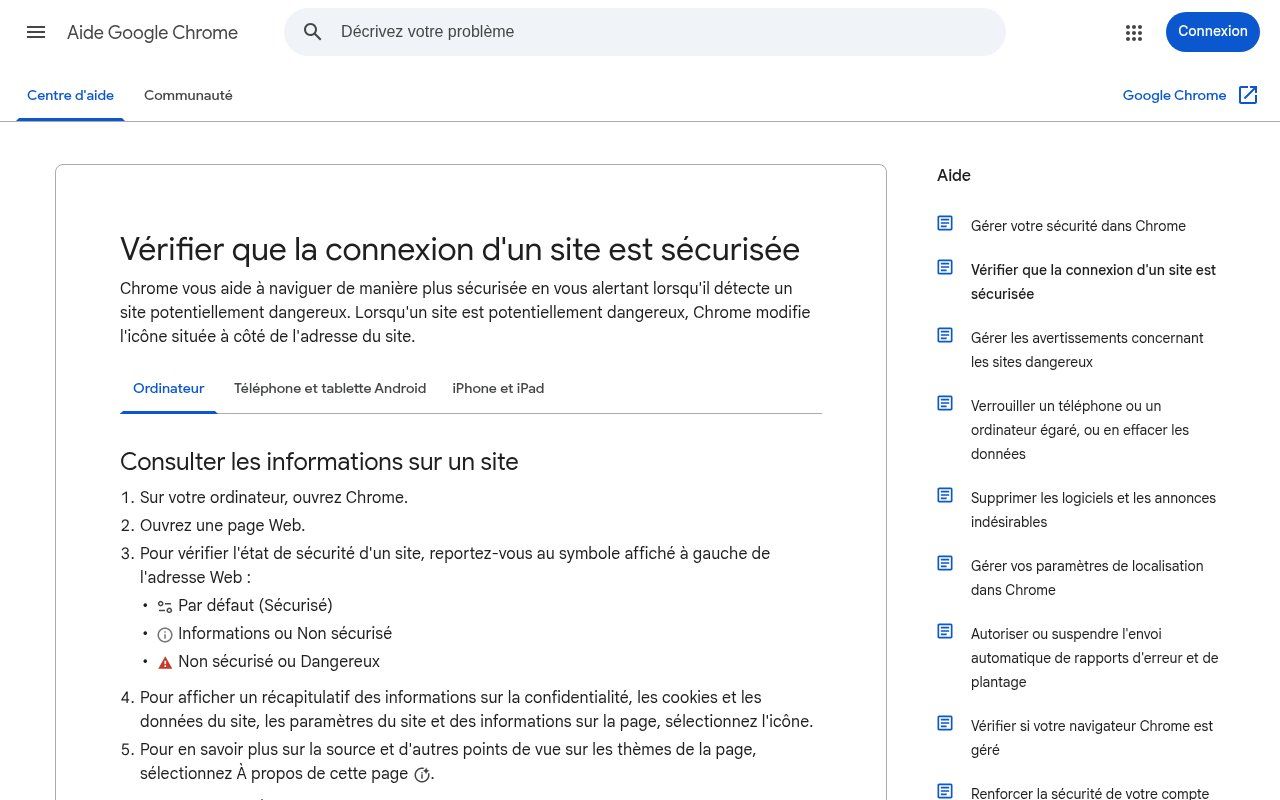
Source: screenshot of the Google Chrome Help page on checking a site's connection (support.google.com, French version), viewed on 13 October 2026.
Picture it. An NGO manager in Dakar or Lomé is looking for a provider, lands on your site and reads "Not secure" just before filling in the contact form. They have no reason to trust you. Your competitor has a padlock.
Why it became essential in 2026
1. Chrome warns before opening a site without HTTPS
The Chrome security team announced it in a post called "HTTPS by default", published on 28 October 2025: with Chrome 154, the "Always Use Secure Connections" setting is turned on by default. The Chrome 154 release notes confirm it: the browser now asks users before connecting to a site over HTTP. Since Chrome is the dominant browser on Android, your mobile visitors are the first affected.
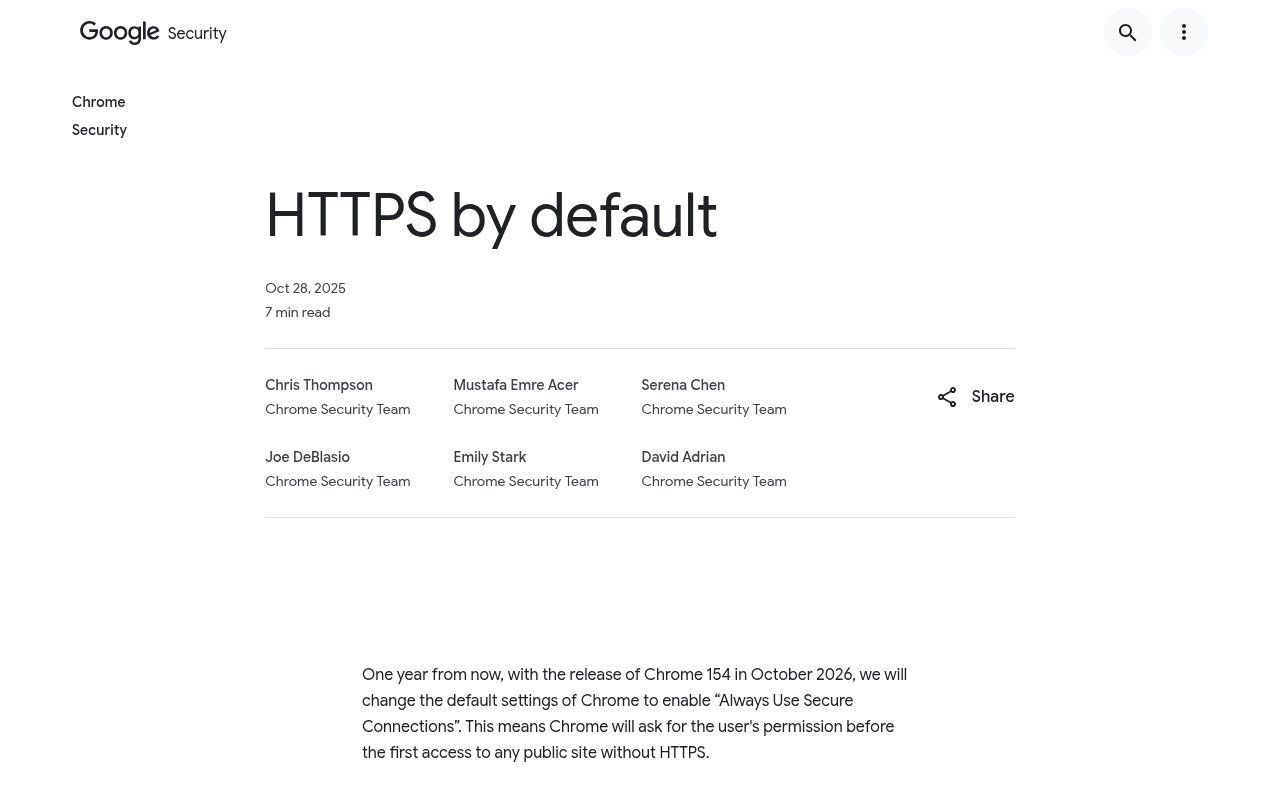
Source: screenshot of the "HTTPS by default" post on the Google Security blog (security.googleblog.com), viewed on 13 October 2026.
2. Certificates last less and less
This is the change people talk about least, and the one that will break the most sites. The CA/Browser Forum, which sets the rules for certificate authorities, voted a reduction schedule in ballot SC-081:
- 200 days maximum for a certificate issued since 15 March 2026;
- 100 days from 15 March 2027;
- 47 days from 15 March 2029.
The direct consequence: if someone renews your certificate by hand once a year, that model is dead. An expired certificate means a full-screen red error page, worse than a simple "Not secure". Renewal has to be automatic, full stop. It is the first question we ask any hosting provider.
3. Google takes it into account, but don't kid yourself
Back in 2014, Google announced on its Search Central blog that it used HTTPS as a ranking signal. It also said the signal was very lightweight, affected fewer than 1% of queries and carried less weight than content quality. Our view: HTTPS will not push you onto page one by itself. But without it, you lose the visitors your SEO work brought in, and that is a pure loss.
4. The law asks you to protect data
In Benin, article 426 of the Digital Code (law no. 2017-20) requires anyone processing personal data to take technical measures to protect it, in particular against interception when data travels over a network. A contact form that sends phone numbers in plain text clearly goes the wrong way. HTTPS alone does not make you compliant with the APDP, Benin's data protection authority, but it is the bare minimum. Other West African countries have similar laws, and the GDPR applies if you process data from European residents.
Free or paid SSL certificate: which one?
There are three validation levels. A DV (domain validation) certificate only proves that you control the domain name. OV (organisation validation) and EV (extended validation) add a check on the business itself. All three encrypt the connection in the same way.
Logo: Let's Encrypt (letsencrypt.org).
For the vast majority of showcase sites, online shops and NGO websites, a free DV certificate is enough. The best known is Let's Encrypt, a non-profit certificate authority. According to its FAQ, its certificates are free, DV only, valid for 90 days, with renewal recommended every 60 days. It has also announced a move to 45 days by 2028. That sounds short, but everything is designed to be automatic.
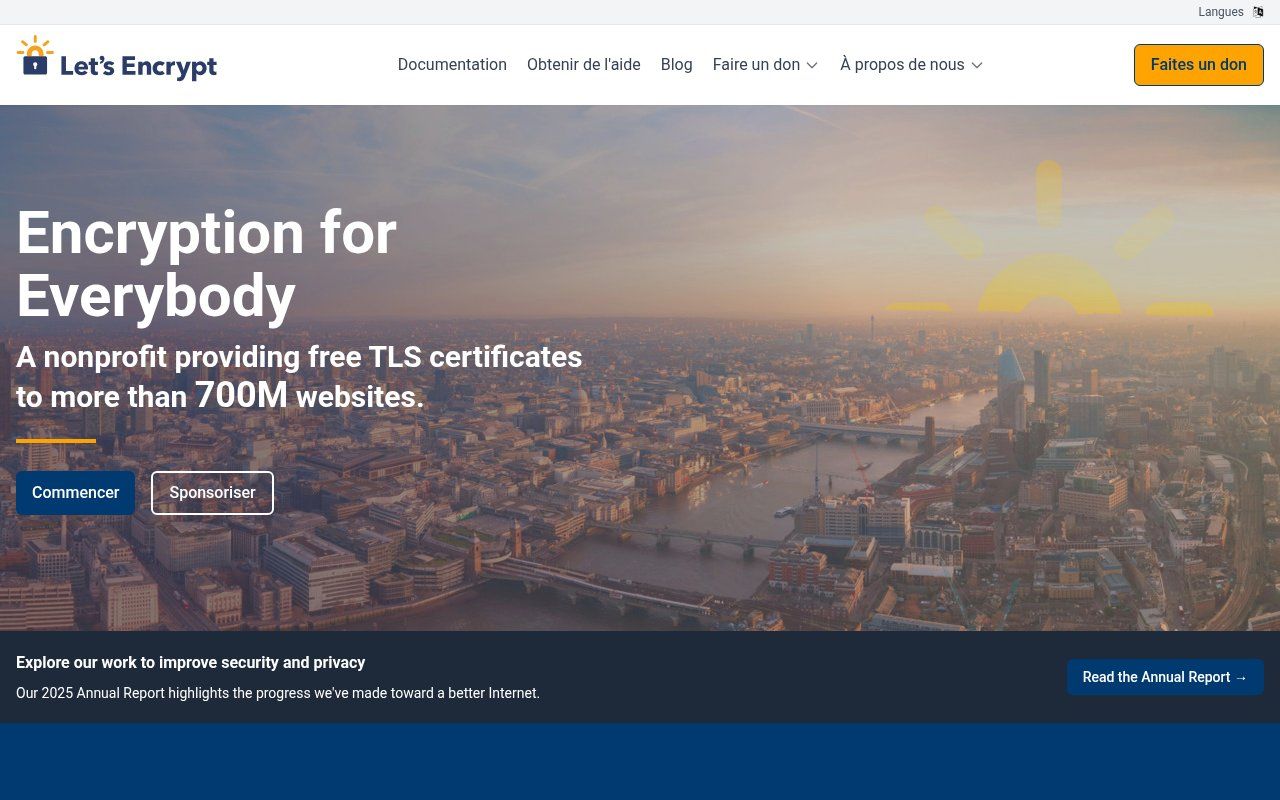
Source: screenshot of the Let's Encrypt home page (letsencrypt.org, French version), viewed on 13 October 2026.
One example we know well: our own site, guelichweb.online, runs on a 90-day Let's Encrypt certificate that renews automatically. We never touch it.
So when should you pay? When a tender, a bank or an institutional partner requires an OV or EV certificate, or when your host does not offer Let's Encrypt. Be wary, on the other hand, of a provider who bills a "premium SSL certificate" every year for a simple showcase site without explaining why. The Let's Encrypt FAQ acknowledges that some hosts charge modest management fees, which is fair. Paying a lot for DV is much less so.
The padlock does not mean "honest website"
This is the misconception we correct most often. The padlock guarantees that the connection is encrypted and that you are on the domain shown. It does not guarantee that the person behind it is honest. A scam site can perfectly well have a free certificate. Google itself advises, in its help pages, to always check the site name in the address bar. For your customers, remember this: the padlock protects the journey, not the destination.
The padlock protects the journey, not the destination.
How to check your site in two minutes
- Type your address with http:// (without the s). You should be redirected automatically to https://. If not, some of your visitors still land on the insecure version.
- Click the icon to the left of the address in Chrome, then the connection details: you will see who issued the certificate and when it expires.
- Go through your key pages (home, contact, shop). If a page shows "Not secure" while the home page has the padlock, it is often an image or script loaded over http, known as mixed content.
- Test the configuration with the free Qualys SSL Labs SSL Server Test. Tick the option that keeps the result off the public boards.
- Ask your host or provider one thing in writing: is certificate renewal automatic?
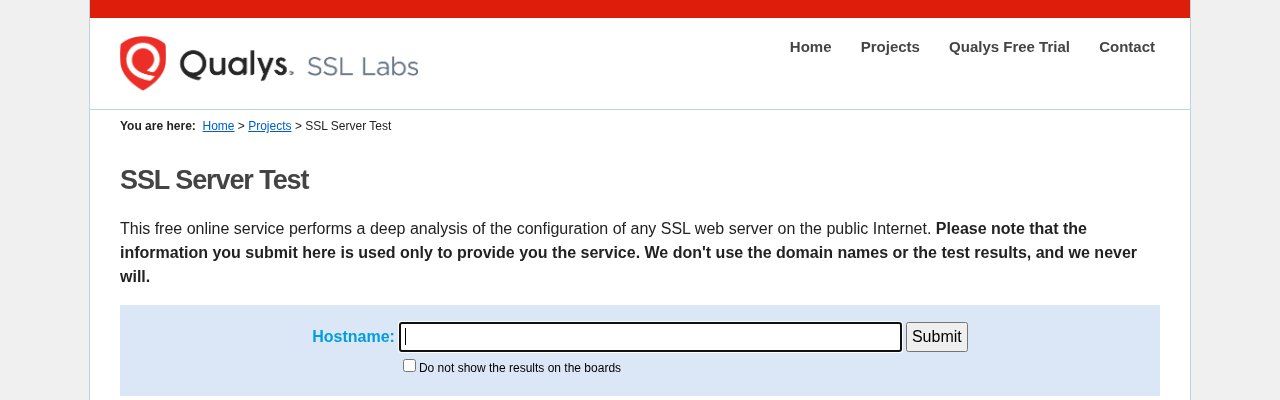
Source: screenshot of the Qualys SSL Labs SSL Server Test page (ssllabs.com), viewed on 13 October 2026.
If your site is new and you want to know what a quote should include, we covered it in our article on website cost in Benin: hosting, domain name and HTTPS should all be clearly listed. And if you were tempted by a free plan, read what you really get with a free website.
Related reading: Intranet, Cookies and trackers and The difference between the Internet and the Web.
Frequently asked questions
What does the S in HTTPS stand for?
It stands for "Secure". It means the exchanges between the browser and the website are encrypted using the TLS protocol.
Is an SSL certificate mandatory?
No law uses the words "SSL certificate", but protecting the data your visitors send is a legal obligation in Benin, as in many other countries. And in practice, Chrome now warns your visitors before opening a site without HTTPS. For a professional website, it is mandatory in practice.
How much does an SSL certificate cost?
A DV certificate can be free, with Let's Encrypt for example, and most serious hosts enable it at no extra cost or for a small management fee. OV and EV certificates are paid, and their price depends on the certificate authority you choose.
My site has the padlock. Am I covered?
For the connection, yes, as long as renewal is automatic. For the rest, no: updates, strong passwords, backups and spam protection on forms are still needed.
Why does my site show "Not secure" when I have a certificate?
The most common causes are an expired certificate, no redirect from http to https, or mixed content: an image, font or script still loaded over http.
Want a secure website without having to think about it?
On the sites we deliver, HTTPS and its automatic renewal are part of the baseline, not an add-on. If your current site shows "Not secure" or you don't know who renews your certificate, we can review it with you. The price comes after an assessment, as explained on our offers page. Contact us for a first conversation, or see our website creation offer in Cotonou.