The difference between the Internet and the Web: a simple explanation (and what Web 2.0 really means)
G. CHRIST
Published on October 17, 2026
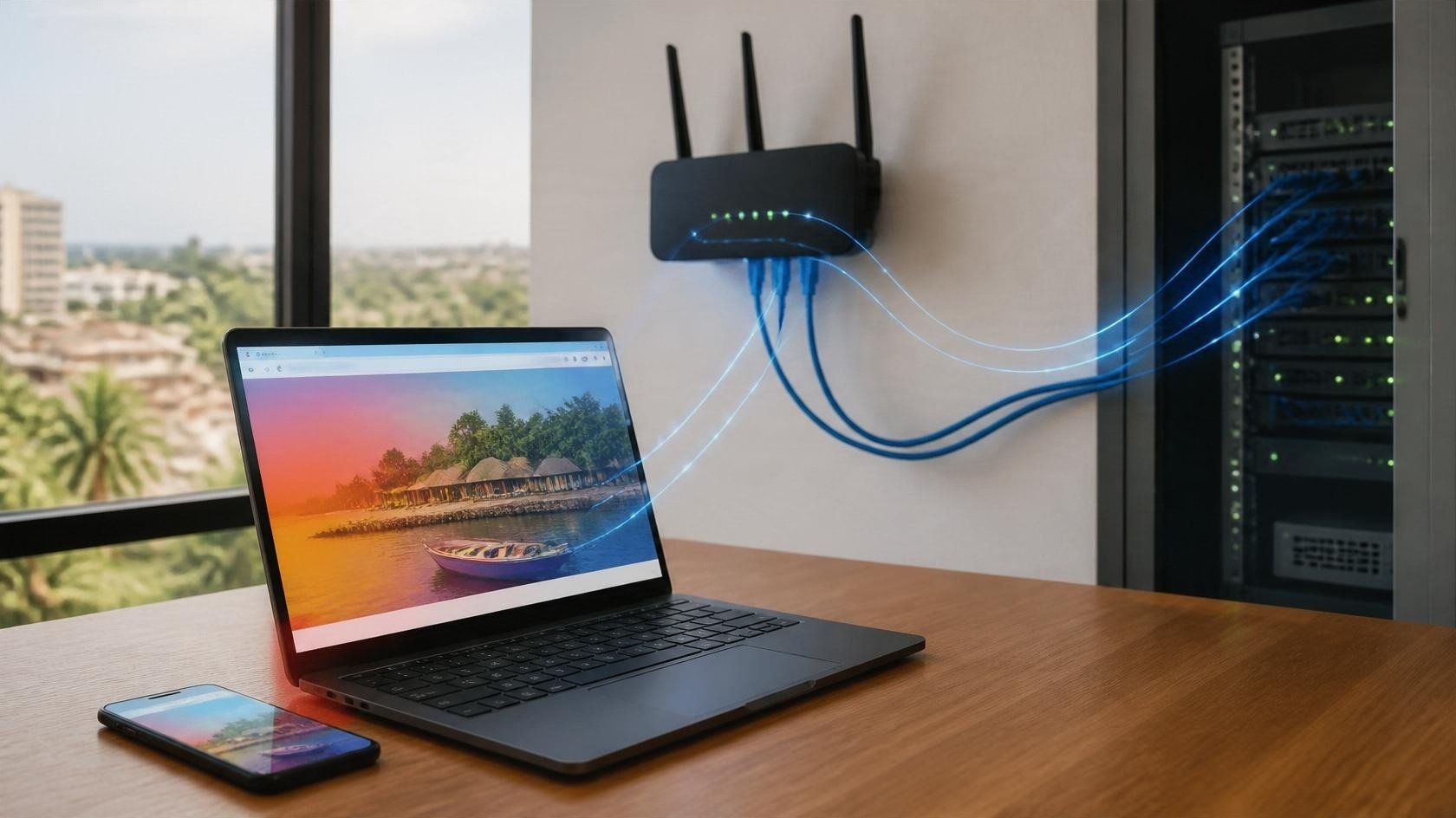
"The website isn't working, it's the Internet." We hear that sentence almost every week. Sometimes it's true. Often it isn't: the Internet works fine, so does WhatsApp, and only the website is down. Mixing the two up wastes time, and sometimes money, when you call the wrong provider.
So let's settle it once and for all. Here is the difference between the Internet and the Web, explained without jargon, with a diagram, a little history, a clear definition of Web 2.0, and above all what it actually changes for an SME, an NGO or an institution in Benin.
The short answer: the Internet is the network, the Web is a service
The Internet is the infrastructure: a huge network of networks linking billions of computers, phones and servers, and carrying data between them. The Web (World Wide Web, or WWW) is one of the services that use this network: a set of pages and sites joined by links, which you view in a browser.
That is exactly what MDN, the developers' reference documentation, says: the Internet is an infrastructure, whereas the Web is a service built on top of it, just like email (MDN, How does the Internet work?).
A picture helps. The Internet is the roads. The Web is one type of vehicle driving on them. Email, WhatsApp, video calls and streaming are other vehicles on the same roads.
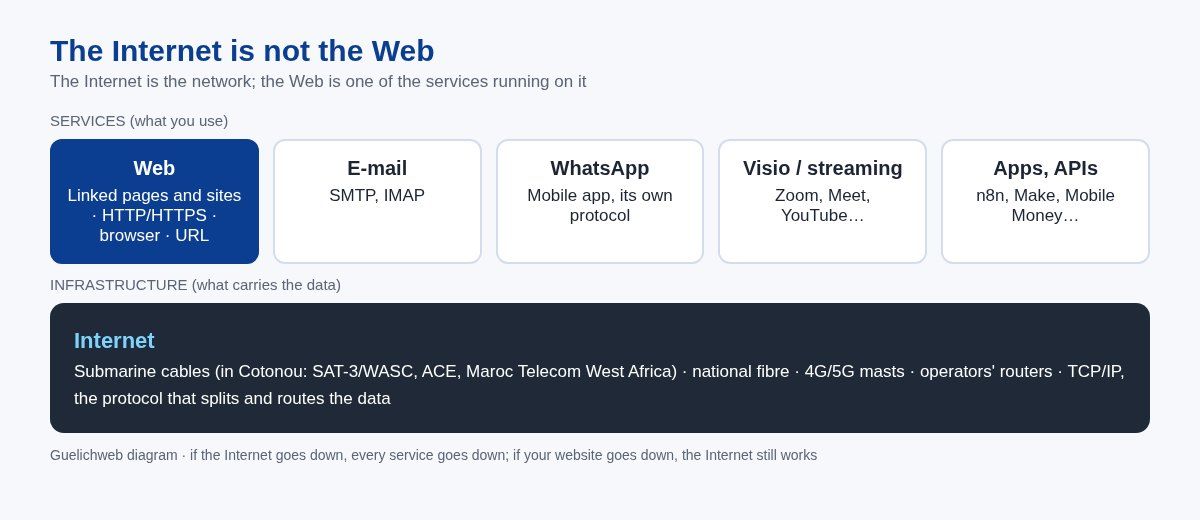
Source: Guelichweb diagram, October 2026.
The Internet, in practice: cables, masts and shared rules
There is nothing virtual about the Internet. It is cables laid on the ocean floor, fibre buried along roads, 4G and 5G masts, and routers passing data along from one to the next. For machines all over the world to understand each other, they follow the same set of rules, the TCP/IP protocol.
In Benin, much of this infrastructure arrives by sea. Three submarine cables land in Cotonou: SAT-3/WASC, ACE and Maroc Telecom West Africa (Submarine Cable Status). In December 2020 the Council of Ministers approved a branching point on the future 2Africa cable, noting that the SAT-3 and ACE stations would reach end of life in 2025 and 2032 (minutes of 23 December 2020, in French).
Why does that matter to you? Because when several of these cables fail, everything slows down at once. On 14 March 2024, submarine cable failures disrupted connectivity in several West and Central African countries, Benin among them (Cloudflare). That day it wasn't "the Web" that broke: it was the roads.
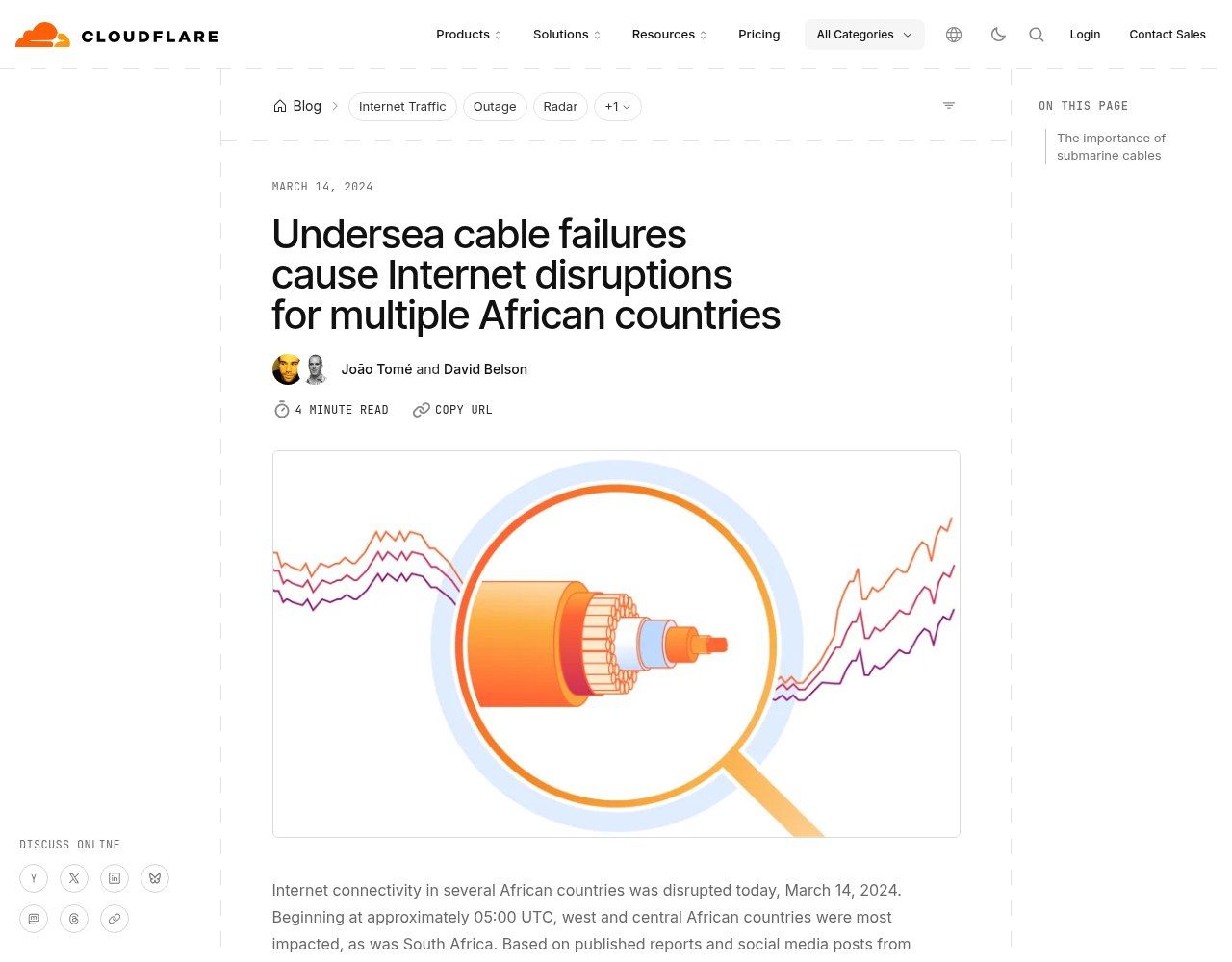
Source: blog.cloudflare.com, post of 14 March 2024 on submarine cable failures in Africa, screenshot taken on 17/10/2026.
Access also remains uneven: according to the International Telecommunication Union, only 36% of Africa's population uses the Internet in 2025 (ITU, Facts and Figures 2025).
The Web: pages, links and a browser
The Web rests on three building blocks. HTML, the language of pages. The URL, the address of each page. And the HTTP protocol (or HTTPS, its encrypted version), which carries pages between the server and your browser (MDN, World Wide Web).
When you type an address into Chrome, Firefox or Safari, your browser sends a request to a web server, receives the page and displays it. That whole trip goes over the Internet. But an email sent from Outlook or a WhatsApp message also travel over the Internet without ever touching the Web: they use their own protocols. If the "S" in HTTPS puzzles you, we explain it in what does HTTPS mean and what is an SSL certificate.
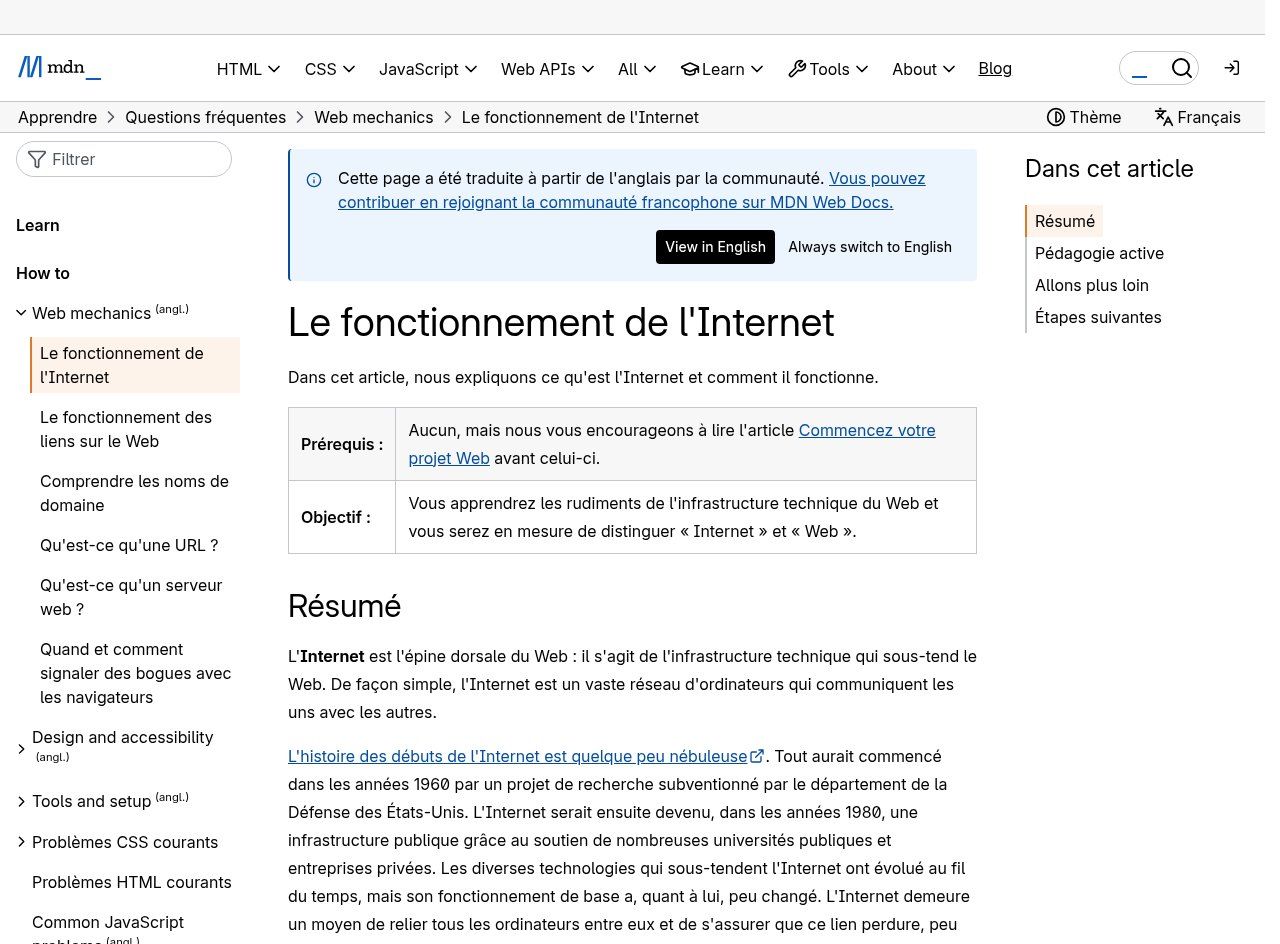
Source: developer.mozilla.org (MDN Web Docs), French version of "How does the Internet work?", screenshot taken on 17/10/2026.
A little history: the Internet was born long before the Web
The Internet's ancestor, the ARPANET network, appeared in 1969 in the United States to link university computers (EHNE, in French).
The Web came twenty years later. Tim Berners-Lee, a British scientist, invented it in 1989 at CERN, near Geneva, so that researchers around the world could share information (CERN, The birth of the Web). The first website, info.cern.ch, was dedicated to the project itself and hosted on his NeXT computer. On 30 April 1993, CERN put the Web software in the public domain. That decision is what allowed the Web to spread everywhere.
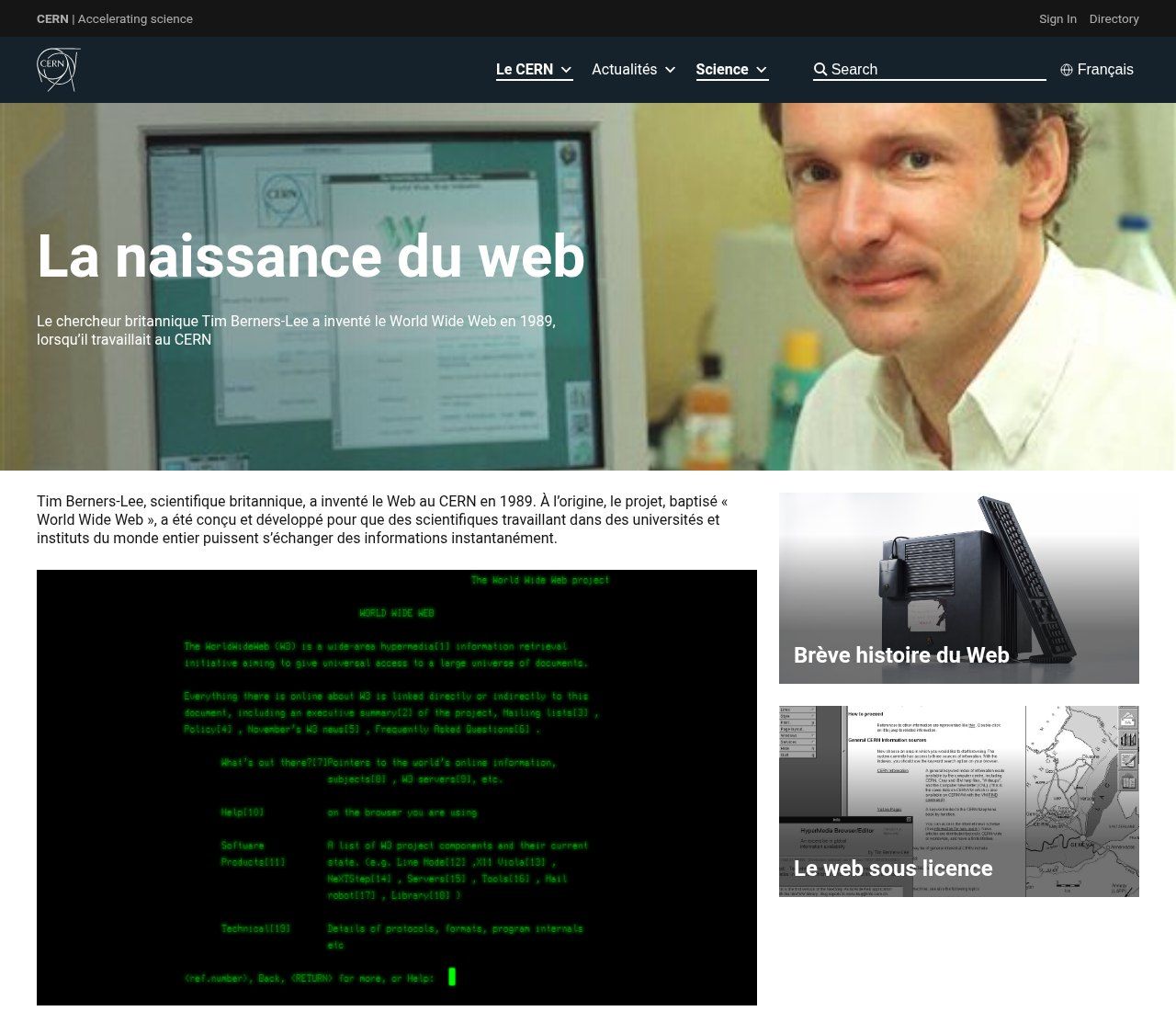
Source: home.cern, "The birth of the Web" page (French version), screenshot taken on 17/10/2026.
The first web page is still online. Go and have a look: no images, no colour, just text and blue links. The whole Web of today starts there.
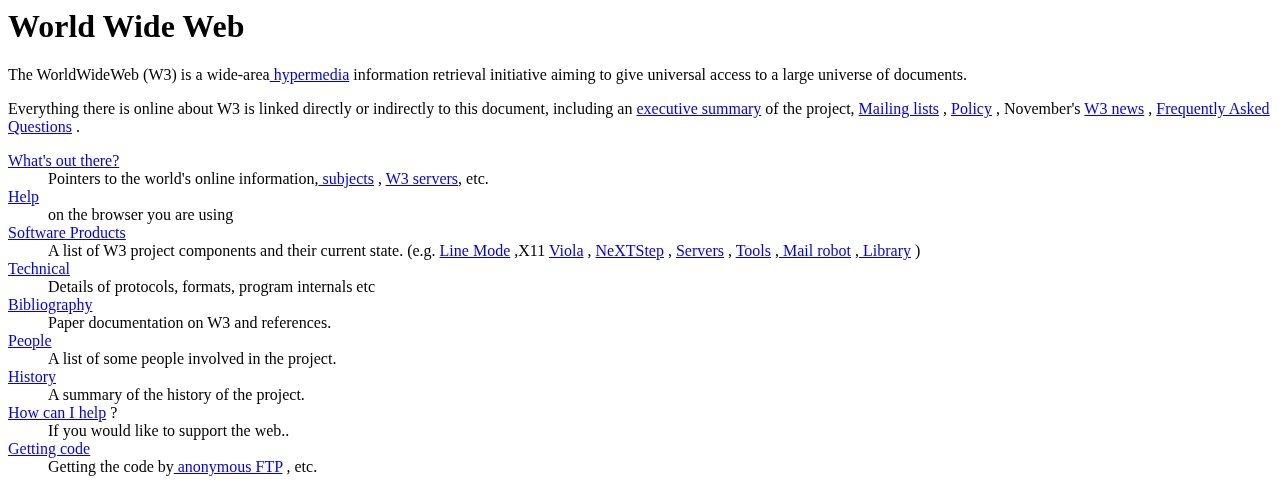
Source: info.cern.ch, 1992 copy of the first website restored by CERN, screenshot taken on 17/10/2026.
Web 1.0, Web 2.0, Web3: what the numbers mean
These numbers are not official versions of the Web. They are labels describing ways of using it.
- Web 1.0: the early Web, mostly read-only. Sites publish, visitors read. People call it the "static Web".
- Web 2.0: the participatory Web. Users publish, comment, rate and share. Blogs, Wikipedia, YouTube, social networks, customer reviews.
- Web3 (or Web 3.0): a still vague term which, depending on the author, means the semantic Web or a decentralised Web built on blockchain.
Web 2.0: the definition
Web 2.0 describes the Web where users are no longer only readers but also authors. The term was used as early as 1999 by designer Darcy DiNucci, then popularised by the first Web 2.0 conference in October 2004 (Futura, in French).
In his landmark article "What Is Web 2.0", published on 30 September 2005, Tim O'Reilly sums up the shift with a few telling pairs: Britannica Online becomes Wikipedia, personal websites become blogging, publishing becomes participation (O'Reilly).
Our view on Web3: for a Beninese SME or NGO in 2026, it is not a priority. A fast website, an up-to-date Google profile and a well-connected WhatsApp bring in far more than a blockchain project.
What it changes for your business
1. Knowing whom to call when something breaks
Run a thirty-second test. WhatsApp and Google work, but your website won't open? The problem lies with your site, its hosting or its domain name: call your web provider. Nothing loads, neither WhatsApp nor other sites? It's the connection: your operator, your router or your data plan.
2. Being "on the Internet" is not the same as having a website
A Facebook page or a TikTok account is Web 2.0, but on someone else's land. The rules, your reach and even access to your page can change overnight. Our position is simple: social networks to attract, your own website to reassure and convert. If you are unsure which kind of site you need, read our definition of a website and its 6 types.
3. Give your website some Web 2.0
A site that only displays a brochure is Web 1.0. It isn't useless, but it sleeps. Add what gets people to react: a WhatsApp button, a quote form, customer reviews (your Google Business Profile collects them), a blog that answers your customers' real questions. That is also what helps Google find you, as we explain in how to appear on Google.
4. Think of visitors who pay for their data
In Benin, many of your visitors arrive on mobile, with a data plan they pay for by the megabyte. A heavy page is a page people close before it finishes loading. Compressed images, no autoplay video, short pages: this is respect for your customer, not a technical detail.
5. Connect your tools to each other
The Internet is not just web pages. Your tools also talk to each other over the Internet, through APIs: your form can create a customer record, alert the team on WhatsApp and fill in a tracking sheet, with no copy-pasting. That is the territory of automation with n8n or Make; we compare the two in n8n or Make: which tool to choose, and show the effect on sales in website, WhatsApp and CRM.
Related reading: What is a URL, What is a web browser and Cookies and trackers.
Frequently asked questions
Can you have the Internet without the Web?
Yes. You can send email, chat on WhatsApp or make a video call without opening a single web page. The reverse is impossible: no Internet, no Web (apart from a test site on your own computer).
Is WhatsApp the Internet or the Web?
The WhatsApp app uses the Internet, but it is not the Web. WhatsApp Web, on the other hand, is a version that opens in a browser, so it is on the Web.
Who invented the Web, and when?
Tim Berners-Lee, at CERN, in 1989. The Internet descends from the ARPANET network, launched in 1969 in the United States as a project of the US agency ARPA.
Does Web 2.0 still exist?
The term is rarely used now, because the participatory Web has become the norm. Social networks, online reviews and comments are all Web 2.0.
Are "the Web" and "a website" the same thing?
No. The Web is the whole set of linked pages around the world. A website is a group of pages under one address, yours for example.
Need an online presence that holds up?
At Guelichweb we build light, fast websites connected to WhatsApp and your tools, with automations that spare you repetitive tasks. The price depends on your needs: we quote after a diagnosis, as explained on our offers page. Discover our website creation service in Cotonou, then contact us to talk it through.