What is a website? A clear definition, the 6 types and how to choose the right one for your organisation
G. CHRIST
Published on October 14, 2026
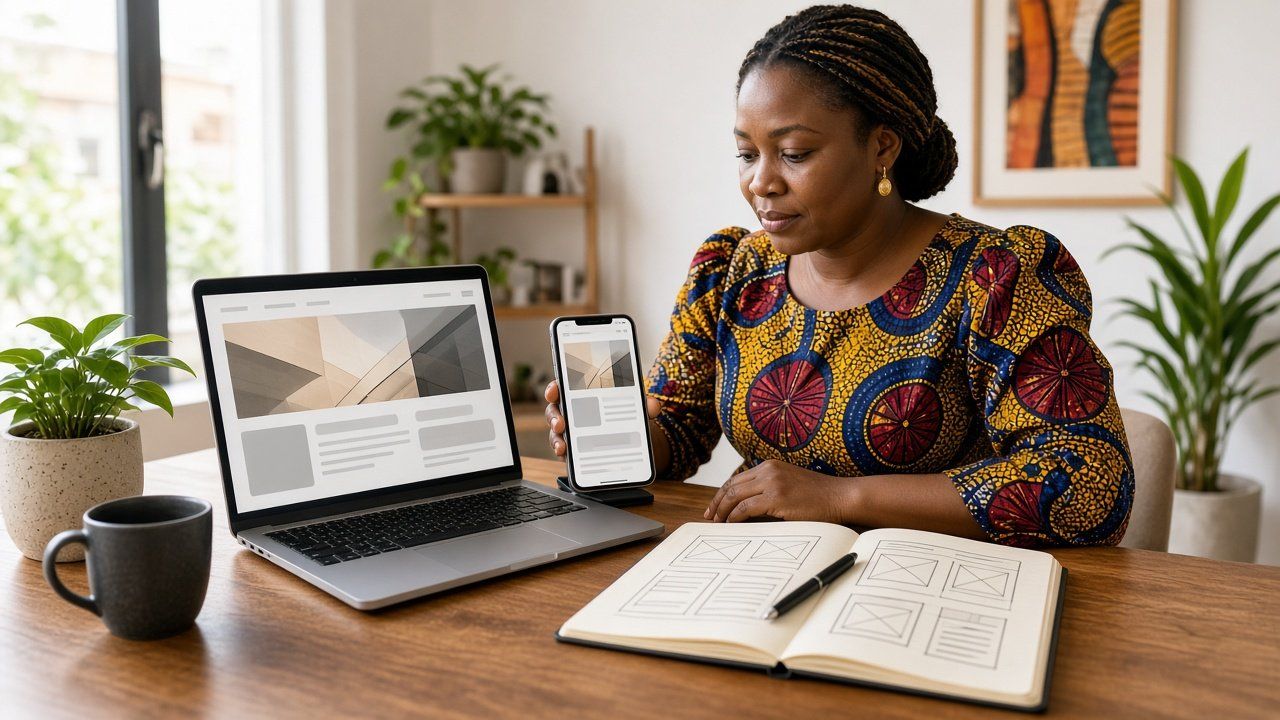
We hear the question in many forms: "I already have a Facebook page and WhatsApp Business, so what's the difference with a website?" Or: "Do I need a website or an app?" Behind these questions there is almost always the same confusion about what a website actually is, and it is expensive: people order the wrong tool, then wonder why it does nothing for them.
At Guelichweb, we prefer to start with the basics. Here is the definition of a website in one sentence, what it really contains, the main types of websites, and above all how to tell which one fits your business, NGO or institution.
The definition of a website, in one sentence
A website is a set of pages linked to each other, published under the same address (the domain name) and viewed with a web browser, on a computer or a phone.
The official French terminology says much the same. The Internet vocabulary published in the French Journal officiel on 8 December 2002, listed on FranceTerme, defines a site as "a set of documents and applications placed under the same authority and accessible on the web from the same universal address".
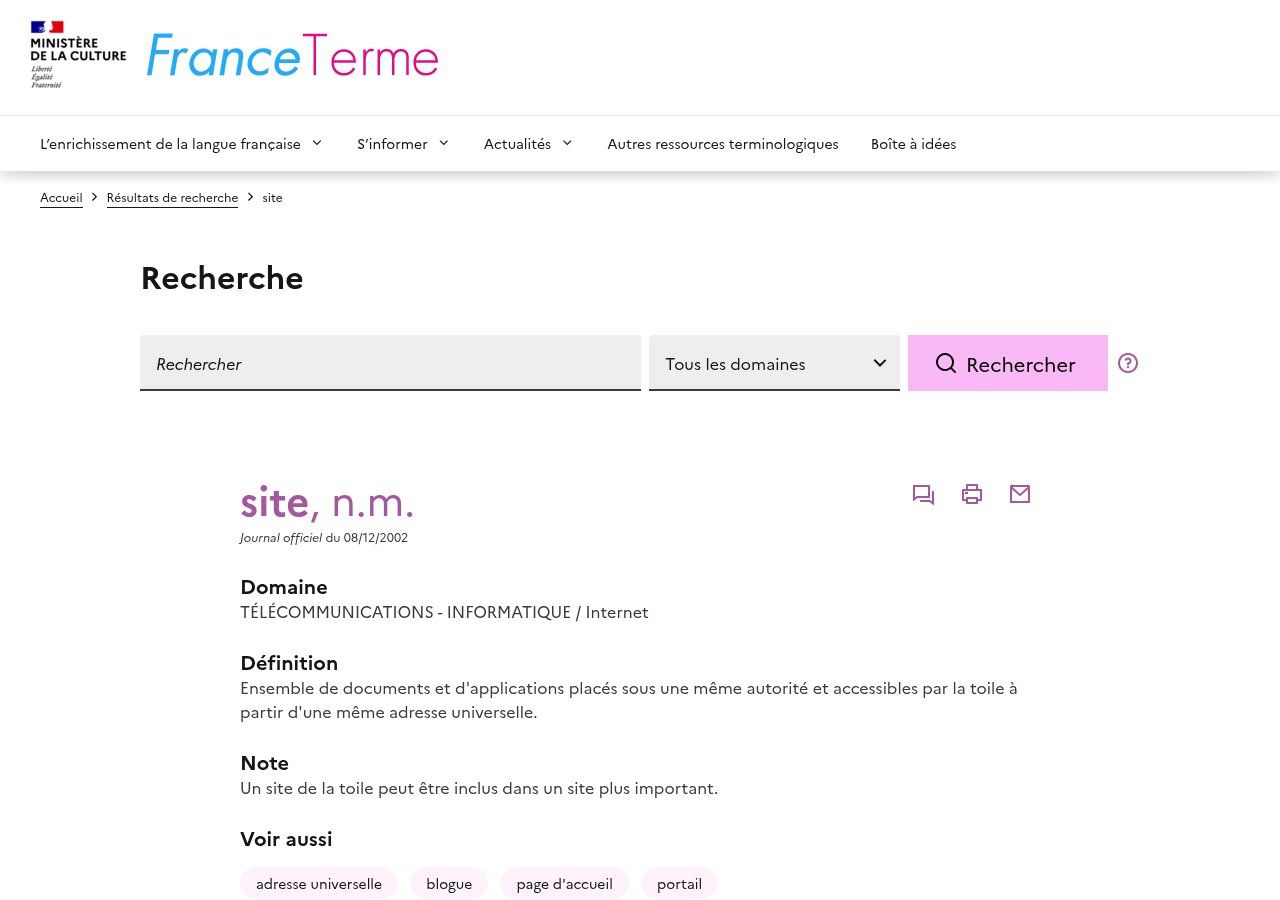
Source: screenshot of the "site" entry on FranceTerme, French Ministry of Culture (culture.fr), viewed on 14 October 2026.
Two words in that definition matter. "Same authority": a website belongs to someone who decides what goes on it. That is exactly what sets it apart from a social media page, where the platform makes the rules. And "applications": a website is not limited to text and photos. It can include a quote form, a payment, a members' area.
Web page, website, server: no more mix-ups
The vocabulary gets muddled quickly. Mozilla's reference documentation, MDN, sets it out clearly:
- A web page is a document that can be displayed in a browser, written in HTML. Your "Contact" page is a web page.
- A website is the collection of your pages, grouped together and connected by links.
- A web server is the computer that hosts the website and sends it to visitors. That is what you rent when you pay for hosting.
- A search engine such as Google is not your website: it is the service that helps people find it.
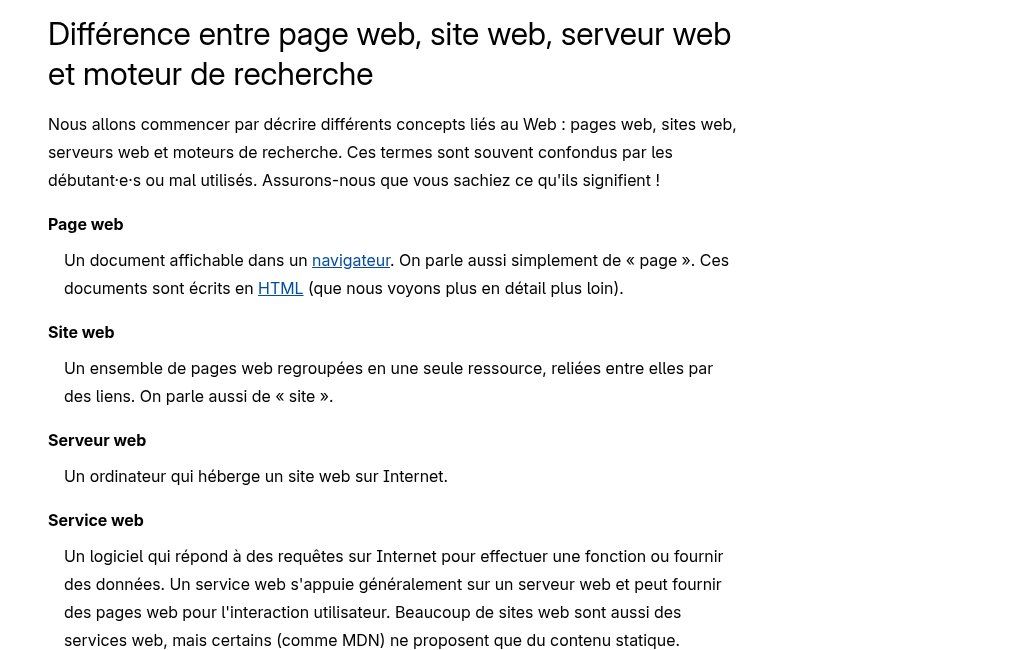
Source: screenshot of the French version of the "Browsing the web" page on MDN Web Docs (developer.mozilla.org), viewed on 14 October 2026.
The address people type, guelichweb.online for example, is the domain name. Each page then has its own URL, the full address that leads to it. If you want to see how a page is built, we covered it in our guide on how to make a web page.
Website or internet site?
In everyday speech, they mean the same thing. Strictly speaking, the Internet is the network and the web is a service that runs on it, hence "website". And a website is not necessarily public: a company intranet is a website that can only be reached internally. Don't spend time on this vocabulary debate; the real issue lies elsewhere.
What a website needs to exist
A website is more than a nice design. To be online and useful, it needs five things, and a good quote should name every one of them:
- A domain name, your address, renewed every year.
- Hosting, the server that keeps it available day and night.
- An HTTPS certificate, the padlock that protects data in transit. Without it, Chrome now warns your visitors, as we explained in our article on HTTPS.
- Content: text, photos, prices or price ranges, contact details, proof.
- Someone to keep it up to date, or it looks old within six months.
The last two are the ones people forget, and they make the difference between a website that brings in business and a decorative one. We detail what a serious quote should include in our article on website cost in Benin.
The 6 main types of websites
There is no official classification, but in practice almost every project falls into one of these families.
1. The brochure website
It presents your business, services, references and contact details, with one simple goal: getting people to contact you. It is the website of most SMEs, firms, schools and service providers. Four to eight well-written pages are often enough. Our view: it is the right starting point for most organisations that have nothing today, as long as it is designed for phones and leads to WhatsApp or a form.
2. The e-commerce website (online store)
It lets people order and often pay online: catalogue, cart, payment, delivery. It is a heavier project, because you have to manage stock, local payment methods such as Mobile Money, and after-sales service. We wrote a full guide on creating an online store in Benin.
3. The blog or editorial website
It publishes articles regularly. On its own, it mostly suits media and experts. Added to a brochure website, it is the best way to be found on Google for the questions your customers ask.
4. The landing page
A single page built for one action: signing up for a course, booking a seat, requesting a quote for a specific offer. It is ideal for an ad campaign or an event. It does not replace a full website, but it often converts better than a general home page.
5. The institutional website or portal
This is the website of NGOs, associations, funded projects and public bodies: mission, reports, news, tenders, recruitment. It must inspire confidence in donors and partners and be easy to navigate. For many organisations, it is also a transparency requirement.
6. The web application
Here the website becomes a tool: customer area, appointment booking, case tracking, dashboard, internal management. You log in, enter data and get a result. This is often where automation and a CRM come in.
Static or dynamic website: what it means for you
This is one of the most common searches around the definition of a website. According to MDN, static content is sent to the visitor as is, while a dynamic website is generated on the fly by the server from a database. Static is simpler and faster; dynamic is more flexible but more complex.
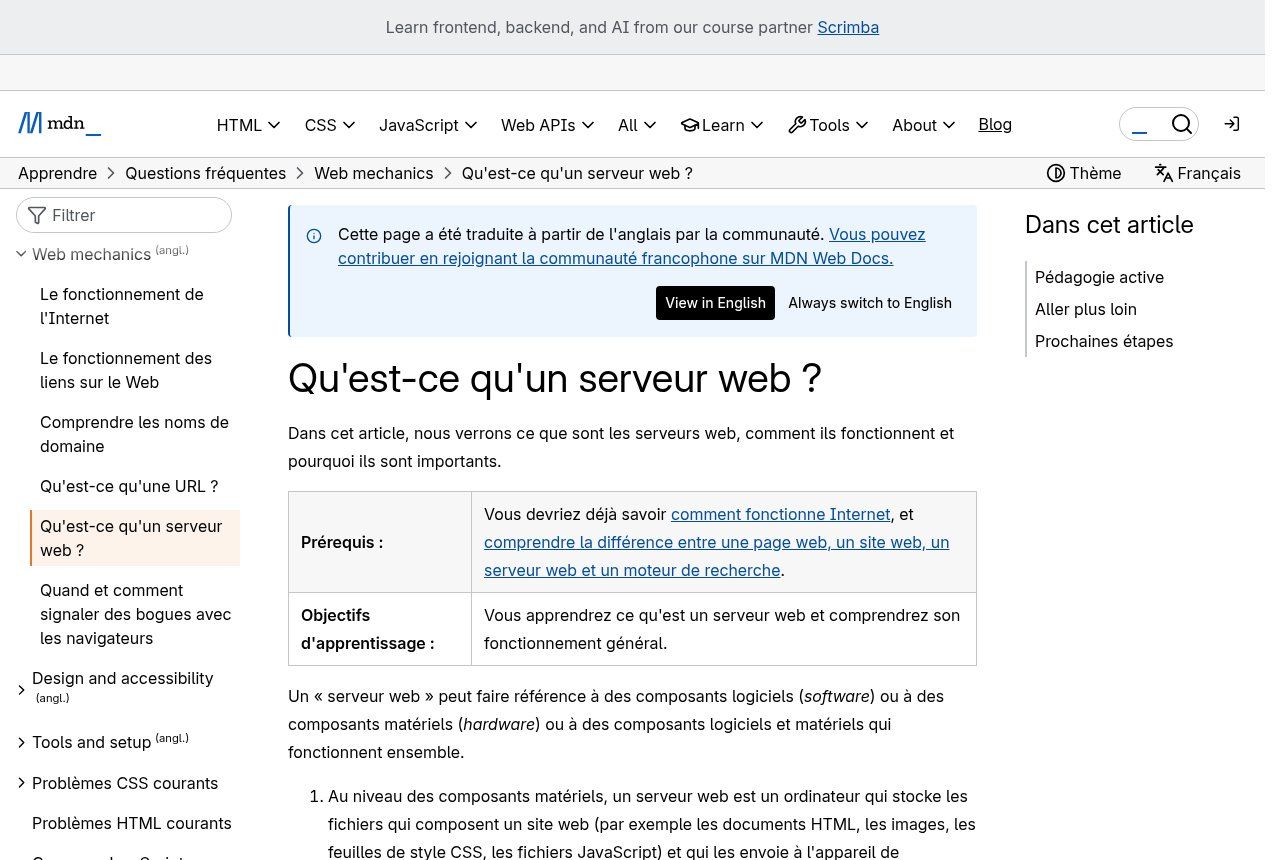
Source: screenshot of the French version of the "What is a web server?" page on MDN Web Docs (developer.mozilla.org), viewed on 14 October 2026.
In practice, the real question is not technical. Ask yourself instead: who will update the website, and how often? If you change your text twice a year, a fast, secure static website is perfect. If you publish articles, job offers or products every week, you need an admin interface, so a dynamic website or a content management system. Many modern websites combine both.
Website, Facebook page, WhatsApp or app: who does what?
In Benin, DataReportal estimates there were 4.80 million internet users in October 2025, or 32.2% of the population, and 2.50 million active social media user identities. Your customers are on Google, Facebook and WhatsApp at the same time. Each tool has its role:
- A Facebook or Instagram page builds visibility and closeness. But you are renting the space: the algorithm decides who sees you, and an account can be blocked overnight.
- WhatsApp Business is where you close and follow up. It is often where the sale actually happens.
- The website is the only address you own. It is what Google shows when someone searches for your service, and it is what a donor or a large client checks to see whether you are serious.
- A downloadable mobile app only makes sense if people use it often, every week or every day. For an SME, it is rarely the first need.
Between a website and an app there is a middle ground: the progressive web app. MDN defines it as an app built with web technologies that can be installed on a phone and offers an experience close to a platform-specific app. Our position is clear: start with a website that works, then grow it. The reverse often ends in an abandoned app. To see how a website, WhatsApp and a CRM work together, read our article on that trio.
How to choose the right type of website
Forget the technology for a moment and answer three questions:
- What should the visitor do? Call, write, buy, sign up, download a report. One main action, not five.
- Who will keep it alive? If nobody has time each week, don't launch a blog or a 300-product store.
- What device do your visitors use? Most likely a phone. Google itself uses the mobile version of pages to index and rank them. A website that looks bad on mobile starts with a handicap.
If your website already exists but brings in nothing, the type of website is rarely the problem. More often it is the message, the speed or the lack of a call to action, as we explain in why your website is not bringing you customers.
Related reading: How to create an app, How to create a logo for your business and How to make a website for free.
Frequently asked questions
What is the simple definition of a website?
A set of linked pages, published under the same address and viewed with a browser. It belongs to a person or organisation that controls its content.
What is the difference between a web page and a website?
A web page is a single document with its own address. The website is the collection of those pages under one domain name.
Can a Facebook page replace a website?
It can be enough to get started, but you don't own it and it rarely shows up in Google searches for a service. For a business or NGO that wants to be found and to reassure, a website remains essential.
What are the main types of websites?
The brochure website, the online store, the blog, the landing page, the institutional website and the web application. Many projects combine two, for example a brochure website with a blog.
What is the difference between a static and a dynamic website?
A static website sends pages that are already built, which is simple and fast. A dynamic website builds pages on demand from a database, which makes publishing and editing content easy.
Not sure which type of website you need?
That's normal, and it's exactly where we start. We look at your business, your customers and what you already have, then tell you honestly what you need, sometimes less than you expected. Explore our services and our website creation offer in Cotonou. The price comes after an assessment, as explained on our offers page. Contact us to talk it through.