What is SEO? A plain definition, and SEO vs SEA explained
G. CHRIST
Published on October 26, 2026
"You need to do SEO." If you run a small business, an NGO or a communications team, you have almost certainly heard that sentence, usually right before a quote. The term is everywhere, yet few people take the time to explain what it actually covers, or how it differs from SEA, its paid cousin.
At Guelichweb we build websites for companies and organisations in Benin and across French-speaking Africa, and we keep running into the same confusion. People pay for an ad campaign believing they are "doing their SEO", or they expect results in two weeks from work that takes months. This guide sets out the definitions in plain words, compares SEO and SEA without jargon, says a word about the "GEO" everyone is talking about in 2026, and gives you a realistic plan to get started.
SEO: the plain definition
SEO stands for *Search Engine Optimization*. In French it is called *référencement naturel*, natural or organic search. It is all the work that helps a website appear in Google, Bing and other search engines, without paying for each click, when someone searches for something related to what you do.
The definition in Mozilla's MDN glossary is one of the cleanest: SEO is the process of making a website more visible in search results. Search engines crawl the web by following links, store the pages they find, then decide which ones to show for each query. SEO means making that job easier for them and earning a good spot.
Two clarifications that prevent a lot of misunderstandings:
- "Organic" does not mean "free". The click costs nothing, but the work does, in time or in fees: writing, technical fixes, monitoring.
- You cannot buy SEO from Google. No amount paid to Google moves a site up in the organic results. Google says so repeatedly in its official documentation.
If you want to understand how a search engine finds and ranks pages before going further, our article on how a search engine works covers the basics.
The three pillars of organic search
SEO is usually split into three areas of work. They move forward together: a technically perfect but empty site will not rank, and neither will excellent content hidden behind a slow or badly built site.
1. Technical foundations
This is the base: Google must be able to crawl your pages, understand them and display them properly on a phone. In practice that means a fast, mobile-friendly site on HTTPS, with clean URLs, a sitemap and no important pages blocked by mistake. In our region, where most visits come from smartphones on sometimes unstable connections, page weight is not a detail. It often decides whether a visitor stays.
2. Content
Google ranks pages that answer questions. One page per real customer need, written with the words your customers actually use, beats ten vague pages. That is where working on SEO keywords pays off: knowing what people type, and answering it better than anyone else.
3. Authority
Links from other websites, mentions of your name, customer reviews on your Google listing: all of these signal that your business exists and is trusted. For a shop or an office that receives clients, a Google Business Profile is part of this pillar and sits at the heart of local SEO.
SEA: paid search
SEA stands for *Search Engine Advertising*. On Google, that means Google Ads. You choose keywords, write an ad, set a budget, and your ad can appear at the top or bottom of the results page, labelled "Sponsored".
Official logos of Google Ads (advertising tool) and Google Search Console (free organic search monitoring tool), provided by Google.
The most common billing model is cost per click: you only pay when someone clicks your ad. That price is not fixed. According to Google Ads Help, an auction runs for every search, and your ad's position depends on your bid but also on the quality of the ad and of the page it leads to, the context of the search and the competition. Google also explains that the actual cost per click is often lower than the maximum you set.
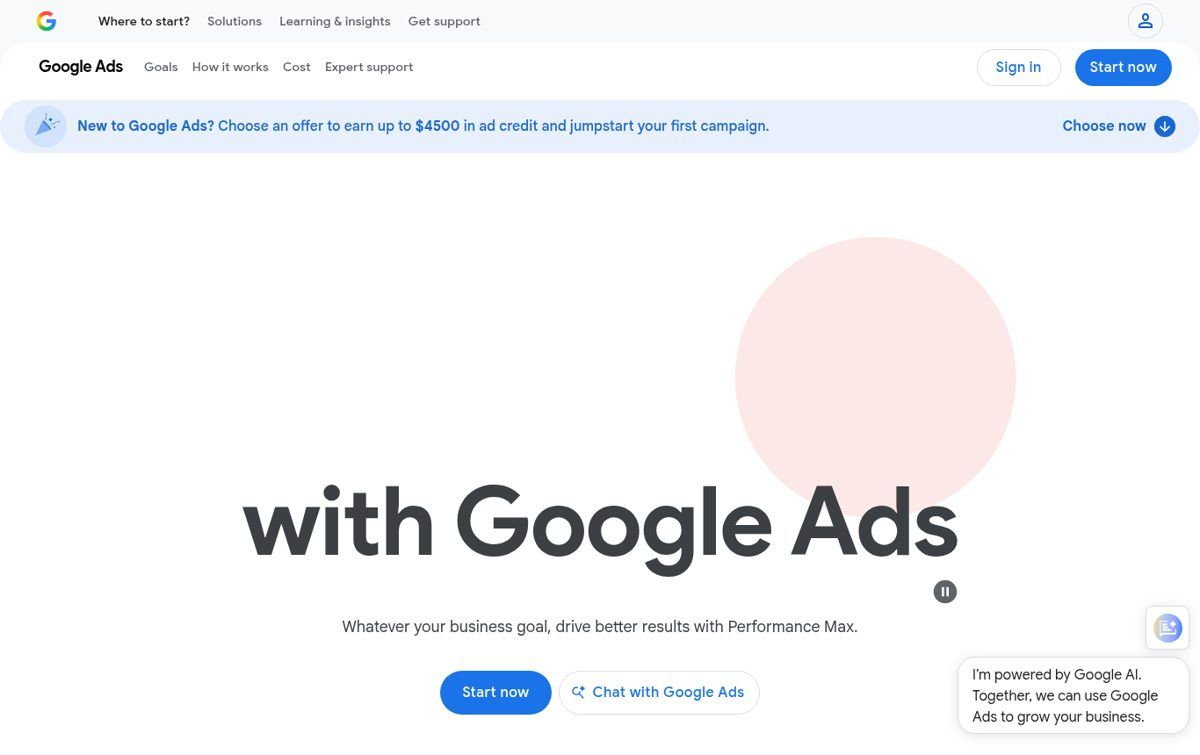
Source: Google Ads home page, ads.google.com, screenshot taken on 26/10/2026.
What we tell our clients: a weak ad sending people to a confusing home page will pay more for clicks that lead nowhere. SEA does not fix a weak website. It just makes it more expensive to visit.
SEO vs SEA: the real differences
Both live on the same results page. What changes is who pays for the click, how long you stay visible, and what you keep when you stop.
- Speed: an SEA campaign can go live the same day. SEO usually takes several months before it brings steady traffic, and Google itself talks about a few months to see the effect of significant changes.
- Cost: SEA is paid per click for as long as the campaign runs. SEO is paid in time or service fees, but the click stays free.
- Longevity: cut the SEA budget and you disappear that evening. A well-ranked page can keep attracting visitors for months, as long as it stays useful and up to date.
- Control: with SEA you choose the message, the audience, the location and the schedule. With SEO you influence the outcome, but Google decides.
- Trust: many users trust organic results more. The French government's France Num guide (in French) notes that only a minority click on ads, even if those who do are often ready to buy.
- Measurement: SEA is tracked click by click in Google Ads. SEO is tracked over weeks, mainly in Search Console.
Our firm view: this is not a contest. Pitting SEO against SEA is like pitting a shop's rent against a billboard. One builds an asset, the other buys attention. A serious organisation almost always ends up using both, but not in just any order.
What about SEM, SMO and GEO?
Acronyms keep multiplying, and some of them mostly exist to impress. Here is what they actually mean.
- SEM (*Search Engine Marketing*): search engine marketing as a whole. Depending on who you ask, it covers both SEO and SEA, or only the paid side. Keep the general idea and skip the definitional debate.
- SMO (*Social Media Optimization*): visibility on social networks. Useful, especially in our region where Facebook, TikTok and WhatsApp carry a lot of weight, but it is a different channel from search engines.
- GEO (*Generative Engine Optimization*) or AEO: the work of being picked up in the answers of AI assistants, such as Google's AI Overviews, ChatGPT or Gemini.
On GEO, Google's position is clear. In its guide to generative AI features in Search, Google explains that these answers rely on its usual ranking systems and that, from its point of view, optimising for AI search is still SEO. We agree. Be wary of anyone selling "GEO" as a separate magic discipline: clear, reliable, well-structured pages that genuinely answer questions remain the best way to be cited, by Google and by an AI.
Why SEO matters for small businesses and NGOs in French-speaking Africa
We often hear: "Here, customers come through WhatsApp and word of mouth, Google is useless." That is true for some customers. But look at what happens just before the WhatsApp message. The person who got your name from a friend very often types it into Google to check that you exist, see your opening hours, read reviews or find your address. If nothing credible shows up, trust drops.
Then there are the people who do not know you yet: a donor looking for NGOs active in your field, a foreign company looking for a supplier in Cotonou, a student in the diaspora comparing schools. These people go through a search engine. Good organic results are meetings you get without paying each time.
One more point we think is underrated: for many local searches in French-speaking Africa, online competition is still weaker than in Paris or Montreal. A well-built page on "your service + your city" can rank faster than you might expect. That window will not stay open forever.
When to choose SEA, when to invest in SEO
SEA makes sense when…
- you are launching a business or a new service and need enquiries in the coming weeks;
- you have a time-limited offer: enrolments, back-to-school, an event, a promotion;
- you target high-intent searches ("quote", "price", "near me") and you know what a customer is worth to you;
- you want to quickly test which keywords bring real contacts before investing in content.
SEO is the priority when…
- you want lasting visibility without a permanent ad budget;
- your customers ask lots of questions before buying (services, training, technical solutions);
- you are an NGO or an institution whose credibility depends on in-depth content;
- your ad budget is limited and every franc has to count over time.
The pattern that works best, from what we see: a small, well-targeted SEA campaign at the start while the SEO pages are being built, then a gradual cut in ads as organic traffic takes over. The campaign data (which keywords bring real contacts) then helps you choose the next articles.
One trap to avoid: sending ads to a generic home page. An effective ad leads to a landing page that talks about exactly what the person searched for, with one clear call to action.
What SEO is not
A good share of our work is reassuring managers who have already paid for "SEO" and seen nothing come of it. A few warning signs:
- A guaranteed number one spot. Nobody can promise it. Google says so in black and white on its page Do you need an SEO?.
- Hundreds of links bought in bulk. Google's spam policies target exactly these practices, and a site can lose visibility instead of gaining it.
- Keyword stuffing. Repeating "web agency Cotonou" twenty times on a page makes it unreadable and has not helped for a long time.
- Reports with no clicks or contacts. A ranking on a word nobody types is worthless. What counts is useful visits and enquiries.
- Mass-produced text with no review. Google does not penalise the tool used to write, it judges usefulness. A hundred hollow pages are worth less than one genuinely useful page, as its guide on helpful, reliable content explains.
Where to start: a 30-day plan
You do not need a big budget to lay solid foundations. This is the order we recommend to a small business or NGO starting from little.
- Week 1: check that Google can see you. Create a Google Search Console account, add your site, submit the sitemap. Type "site:yourdomain" in Google to see which pages are already known.
- Week 1: polish your Google listing. If you receive visitors, create or complete your Business Profile: exact category, opening hours, WhatsApp number, real photos.
- Week 2: list your customers' questions. Go back through WhatsApp messages, calls and emails. Every recurring question is a topic for a page or an article.
- Week 3: rework your key pages. One clear title per page, a description that makes people want to click, one service per page, your city where relevant, a visible contact button.
- Week 4: publish a first in-depth piece answering the most frequent question, then measure with Google Analytics 4 and Search Console.
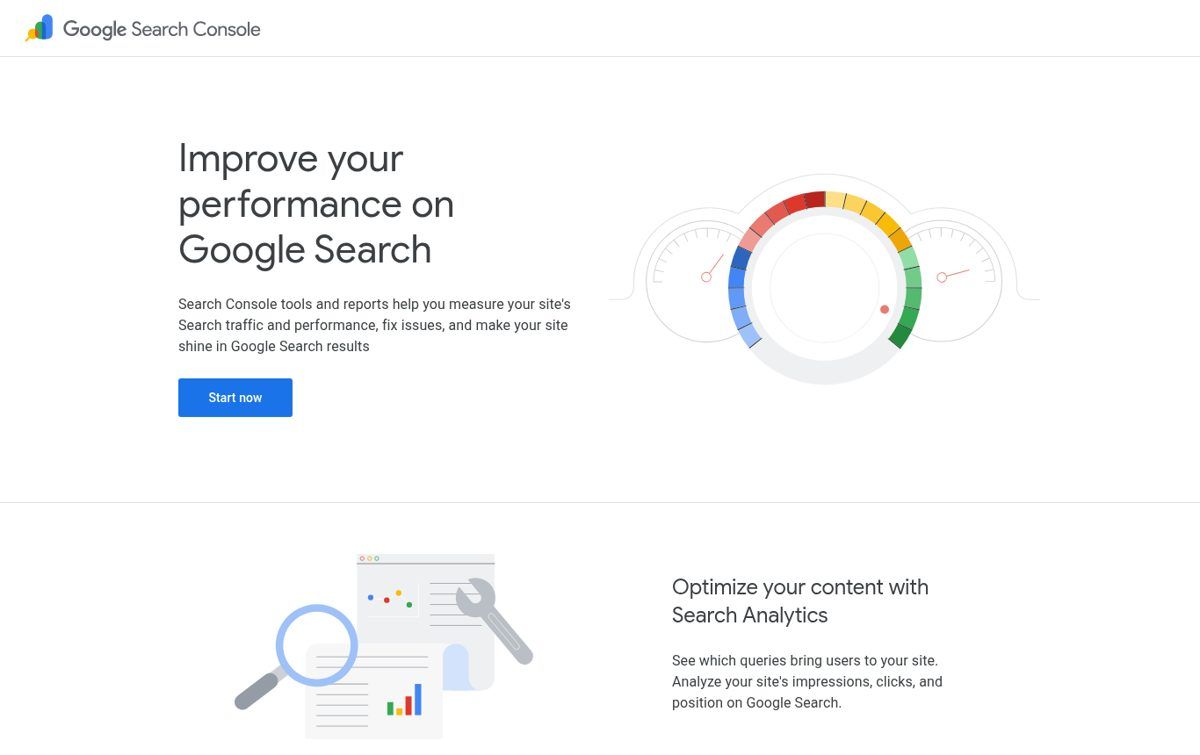
Source: Google Search Console overview page, search.google.com, screenshot taken on 26/10/2026.
Search Console is free and about as honest as a tool gets: its Performance report shows the searches that display your site, the number of clicks, the average position and even the country of the users. It is what will tell you, with real numbers, whether your SEO is moving forward. To go further on your own, Google's SEO Starter Guide is free and far more reliable than most paid courses.
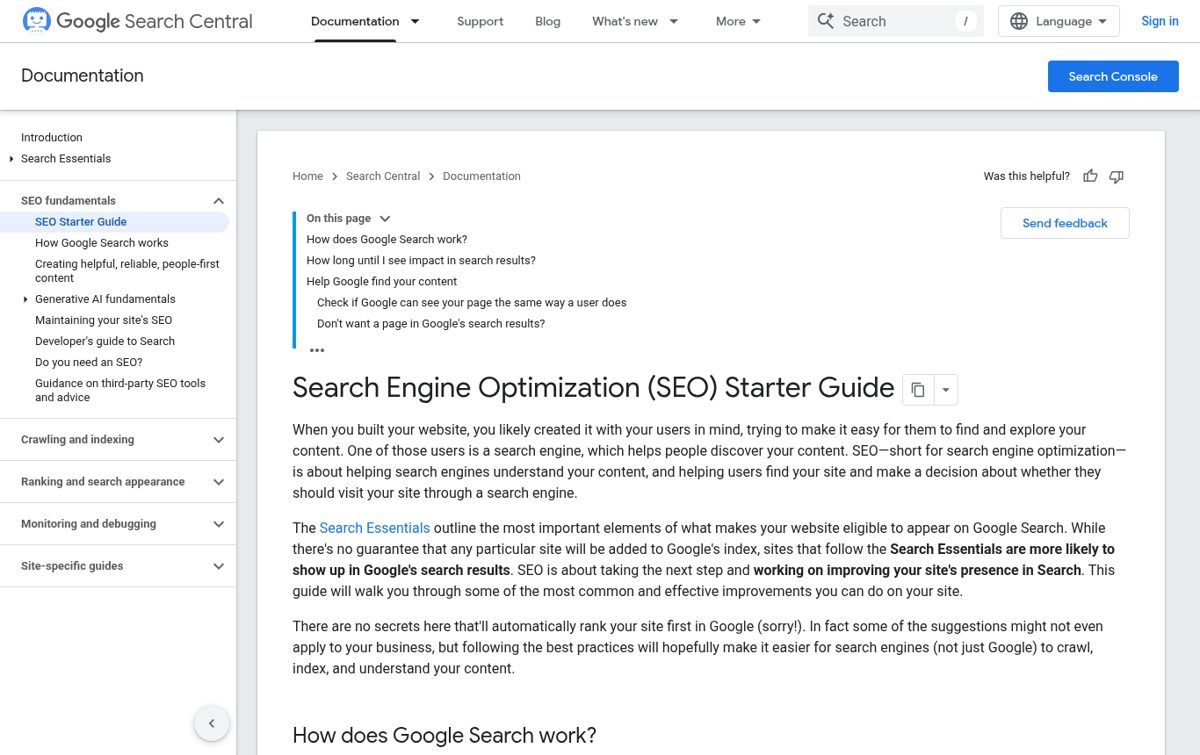
Source: Google Search Central documentation, developers.google.com, screenshot taken on 26/10/2026.
How much do SEO and SEA cost?
There is no single price, and be wary of identical packages for everyone. For SEA, you set the budget yourself in Google Ads, and the real cost of clicks depends on your industry, the target area and competition on the keywords. For SEO, the cost mainly depends on the state of your site at the start: a slow, badly structured or empty site first needs real technical work.
At Guelichweb we always start with a diagnosis of your site and your market, then propose a tailored quote, as explained on our offers page. If your current site brings you no enquiries at all, also read why your website is not bringing customers: the problem is not always SEO.
Frequently asked questions
What does SEO stand for?
SEO stands for Search Engine Optimization. In practice it means improving your visibility in organic, unpaid search results.
What is the difference between SEO and SEA?
SEO improves your site's position in the free results; it is slow but lasting. SEA buys ads in the results, for example through Google Ads; it is fast, but visibility stops when the budget does.
How long does SEO take to work?
Usually several months for steady traffic, sometimes less for local searches with little competition. The first indexed pages and impressions often show up much earlier in Search Console.
Can I do SEO myself?
Yes, for the basics: your Google listing, page titles, content that answers customers' questions, monitoring in Search Console. A professional becomes useful for the technical side, content strategy and the time you do not have.
Do I have to pay Google to rank well?
No. Paying for Google Ads shows ads, but it does not improve your position in organic results.
Does SEO still work with AI-generated answers?
Yes. Google states that its AI features rely on its index and usual ranking systems. A well-optimised site has a better chance of being cited in those answers.
SEO or social media on a small budget?
They do not serve the same moment. Social networks create attention; search engines capture people who are already looking for a solution. If you can only do one thing, start with a well-kept Google listing and two or three solid pages: it costs little and keeps working for you.
In short
SEO is the groundwork that makes your site findable for free and for the long run. SEA is advertising that puts you at the top of the results right away, for as long as you pay. GEO is not a separate third path: it is SEO applied to AI answers. For most small businesses, NGOs and institutions, the right strategy combines a solid SEO foundation with, when useful, a well-targeted advertising boost.
Want to know where your site stands and what to tackle first? Contact Guelichweb: we review your site, your competitors and your goals, then propose a plan and a tailored quote. No website yet? See how we approach website creation in Cotonou, built with search in mind from day one.